
Every NFL season, long before the playoffs even begin, a bizarre but fascinating debate takes over social media. It doesn’t revolve around quarterback stats or defensive schemes, but rather around vector graphics and hex codes. Welcome to the Super Bowl logo color conspiracy theory.
The Psychology Behind the NFL Super Bowl Logo Color Conspiracy
The premise is simple: fans believe the NFL subtly “scripts” the season and hides the two teams destined to play in the Super Bowl within the primary colors of the event’s official logo. With the Super Bowl LXI logo heavily featuring a teal and sunset-orange palette, rumors of a Miami Dolphins versus Chicago Bears (or Los Angeles Rams) matchup are already running wild.
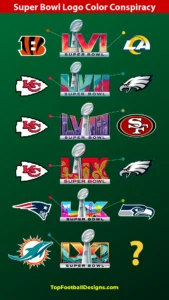
But why does this theory hold such a grip on the football community? From a design and psychological standpoint, the answer is more complex than just a few passionate fans wearing tin-foil hats.
The Birth of the “Scripted” Logo Theory
The conspiracy gained massive traction following Super Bowl LVI. That year, the logo featured a stark yellow and red/orange gradient. The final matchup? The Los Angeles Rams (Yellow) and the Cincinnati Bengals (Orange). The coincidence was striking.
When the Super Bowl LVII logo heavily featured red and green, fans eagerly anticipated a Chiefs vs. Eagles (green) showdown. When it actually happened, the internet exploded. Suddenly, the official NFL brand identity was no longer just a marketing asset; it was treated as a prophetic text.
Why Smart People Fall for It: The Psychology of Patterns
You might wonder why highly intelligent analysts, journalists, and fans entertain a theory based entirely on graphic design choices. The answer lies in the hardwiring of the human brain.
Apophenia: The Pattern-Seeking Engine
Humans are biologically programmed to find patterns in chaos. This cognitive phenomenon is called Apophenia—the tendency to perceive meaningful connections between unrelated things. When a fan looks at a logo and sees their team’s colors, their brain rewards them for “solving” the puzzle, even if the colors simply represent a host city’s sunset or ocean waves.
Confirmation Bias
This is the psychological glue that keeps the conspiracy alive. Fans vividly remember the years when the logo colors perfectly matched the finalists (the “hits”). However, they conveniently ignore or rationalize the years when the theory completely failed (the “misses”). If the colors don’t match, it’s a fluke; if they do, it’s undeniable proof of the “script.”
The Social Media Engine: Engagement Bait vs. True Believers
If you look closely at the online conversation surrounding the Super Bowl 61 logo colors, you will notice three distinct types of people pushing the narrative:
- The Engagement Farmers: Many sports influencers and content creators know the theory is highly improbable. However, they also know that posting “Does the Super Bowl LXI logo confirm a Dolphins run?” guarantees thousands of likes, retweets, and passionate arguments in the comments. It is the ultimate engagement bait.
- The Trolls: A large portion of the NFL community simply loves to lean into the joke. They use the color theory to mock rival teams or playfully argue that the league is rigged against them.
- The True Believers: Finally, there is a vocal minority who genuinely believes the NFL is a scripted entertainment product, much like professional wrestling, and that the graphic design team is tasked with dropping Easter eggs for the fans.
The Designer’s Verdict: Coincidence or Master Plan?
From a professional branding perspective, the reality is much more grounded. Since moving away from the standardized “chrome” era, the NFL’s design strategy has shifted to honoring the host city. The teal and orange of Super Bowl LXI are not predicting a Miami Dolphins appearance; they are capturing the vibrant, 70s-style surf culture of California.
However, as long as sports rely on passion and the human brain loves solving puzzles, the Super Bowl logo color conspiracy will remain one of the most entertaining traditions of the NFL season.
What do you think?
Is the NFL dropping hints through its graphic design, or is it just brilliant regional branding? Let us know your Super Bowl 61 predictions in the comments below!
Who Will Play in the 2027 Super Bowl?
Whether you believe the NFL is subtly dropping hints through its graphic design or you know it’s just brilliant regional branding, the teal and orange of the Super Bowl LXI logo have already set the stage for endless debate.
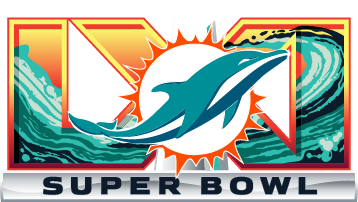
So, looking ahead to the 2027 championship game: do these colors truly confirm a Dolphins vs. Bears showdown, or is your team going to crash the party and break the “script”? Drop your Super Bowl 61 predictions in the comments below!
Related Articles: Super Bowl Logos
Super Bowl 61 Logo: From the Cold Trophy to Vibrant Colors